
Solution Themes

Buildings and Housing (Stationary Energy)

Energy Systems (Stationary Energy)

Mobility and Transports

Waste and Circular Economy

Green Industry (IPPU)
Nature Based solutions, green infrastructures and agriculture (AFOLU)
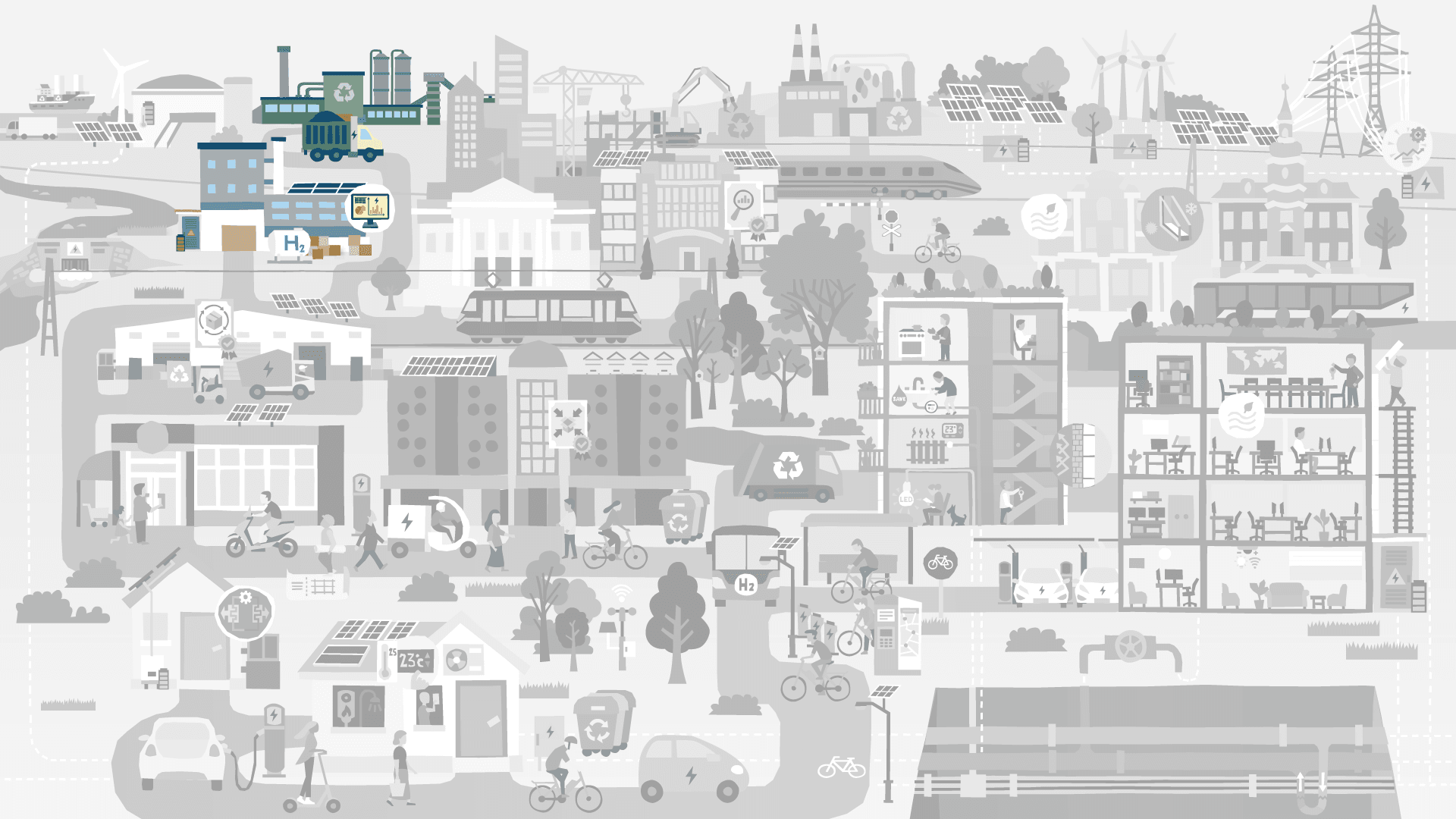
This page provides an overview of resources on the topic of Industrial processes and product use (IPPU) and green industry, with typologies of solutions and cases from Mission Cities

Green Industry (IPPU)
To cut emissions from chemical processes in industry, cities should adopt low-carbon technologies like carbon capture and electrification, boost material efficiency, and integrate renewable energy sources such as solar, geothermal and green hydrogen. Implementing heat recovery and smart systems also enhances energy efficiency. Supporting green industry requires fostering innovation, developing supportive regulations and investing in infrastructure and technologies.
Reading Resources
Decarbonisation Plans for Industry
Companies develop decarbonisation plans by measuring emissions and applying solutions like energu efficiency, renewable energy, and circular economy to reduce emissions and costs.
Green Industry
The text presents key industrial decarbonisation solutions such as CCUS, electrification, hydrogen, energy efficiency and renewable heat, supported by infrastructure and policy.
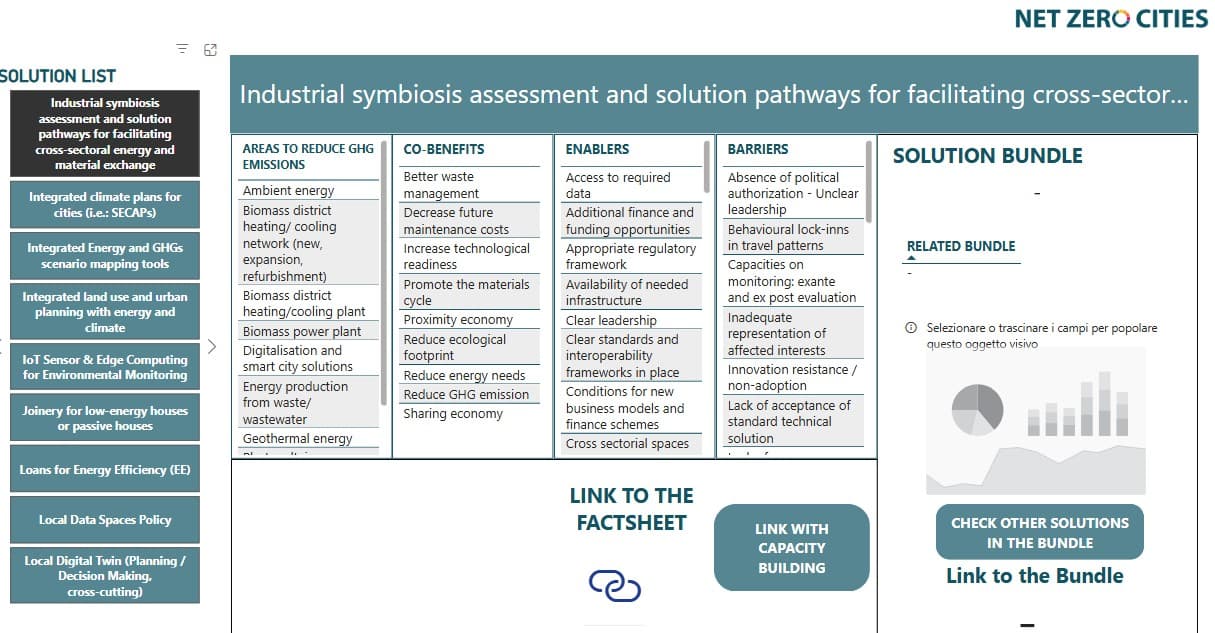
Concept: Industrial symbiosis
Industrial symbiosis connects different industries so they can use each other’s waste as resources, reducing waste and improving efficiency.
Innovation Watch #2 - Sustainable building heating
Industrial circular economy approach using waste as a resource through recycling, by-product exchange, and material reuse
Good delivery with drones
Explores drone-based delivery systems for sustainable urban logistics, including operational models, regulatory considerations, and emission-reduction potential.
Urban Air Mobility
Explains Urban Air Mobility (UAM) systems using electric aircraft and drones for transport and logistics, including infrastructure and regulatory frameworks.
Zero emission vessels - Reduce emission in ports
Provides an overview of zero-emission waterborne transport solutions for port cities, including electrification, alternative fuels, and infrastructure strategies to reduce maritime emissions.
Hydrogen as a fuel in urban transport
Provides an overview of hydrogen as a clean fuel for urban transport, including fuel cell applications, infrastructure needs, and integration into energy systems.
Urban rail
Highlights the role of electrified urban rail systems in reducing emissions and enabling multimodal transport, including innovations in automation, digitalisation, and infrastructure efficiency.
Low-emission Zones
Explains Low-Emission Zones (LEZs) as regulatory tools to limit high-emission vehicles, improving air quality and supporting phased urban decarbonisation strategies.
Urban Vehicles Access Regulation (UVAR)
Describes Urban Vehicle Access Regulations (UVARs) such as low-emission zones and congestion charges to reduce traffic, emissions, and improve air quality and urban liveability.
Green Hydrogen Technologies in green industry
Green hydrogen refers to electrolytic hydrogen produced using electricity generated from renewable energy sources, and also to hydrogen produced via different methods using other renewable sources such as biogas, biomethane, bio-waste and other renewable sources. Since hydrogen’s production translates into extracting it from its compound by using energy from other primary sources, it is an energy carrier used to move, store, and deliver energy.
High Temperature Heat Pumps
Heat Pumps are conversion devices able to transfer heat from a lower temperature heat source into a higher temperature heat sink. Within the last years, due to its large potential, its use for industrial application, recovering heat either from renewable sources or waste heat has been in the focus of the thermal sector. Industrial waste heat represents a valuable heat source for heat upgrade technologies due to its relatively high-temperature level in the form of, e.g. cooling liquid in refrigeration machines, wastewater, warm compressed air, or moist exhaust air.
Solar Thermal in industries
Solar heating technologies collect thermal energy from the sun and use this heat for drying purposes, for space heating/ cooling, or to provide process heat. With the advanced solar process heat technologies, almost 50% of head demand in the industrial sector could potentially be met.
Replacement of equipment
Replacement of equipment and machinery is defined as the “substitution of devices due to both economical operational cost reduction and/or the existence in the market of same kind of equipment with enhance characteristics”, and not necessarily due to failures or existent damage.
Monitoring Systems
The monitoring system is a time measuring tool aimed at monitoring, in the long term, the impact of the energy system. Thanks to the monitoring system it is possible to check the energy and environmental performance of the system collecting data such as water temperatures, water flow rates and energy consumptions. It allows also to verify the comfort conditions inside the building monitoring the inside air temperature.
Energy Management Systems
Energy Management System (EMS) is the powerfull energy management concept that implies the optimal integration of Distributed Energy Resources (generation, storage an consumption with special relevance of reneable energy) in the energy system, specially in the distribution and transport energy grids. It also implies the emerging and active participation of new energy profiles (active consumers, prosumers, aggregators...) in the energy framework, specially in the different existing and coming energy markets. Additionally, it implies the application of advanced and innovative technologies, specially in the domain of the hybridation of energy vectors and in tech integration of intelligence to the energy management systems -EMS (artificial intellegence, algorithmia, data mining, blockchain...) to allow security, privacy, adaptation and automation.
Heat Recovery & Valorisation
Excess heat from certain processes can be a valuable resource for other processes within the industry and even for other industries or users, directly or after some transformation steps. In general industries have implemented solutions as long as these were cost-effective. However, heat recovery potential is still untapped due to a number of technical and non-technical barriers.
Case Studies
Decarbonising transport with Ultra-Low Emission Zones in London
Demonstrates London’s Ultra-Low Emission Zone (ULEZ) reducing emissions and improving air quality through regulatory transport policies.
Blended Finance - BABLE Solutions: Smart Cities, EUROPE
Explains a blended finance model for deploying electric mobility infrastructure through joint procurement and private investment aggregation.
FEBUS, a success story of fuel cell buses deployment - Covenant of Mayors Europe
Demonstrates hydrogen-powered bus deployment in Pau, showcasing infrastructure, financing, and emission reductions in public transport systems.
Learning from Cities
A map is loading