
Solution Themes

Buildings and Housing (Stationary Energy)

Energy Systems (Stationary Energy)

Mobility and Transports

Waste and Circular Economy

Green Industry (IPPU)
Nature Based solutions, green infrastructures and agriculture (AFOLU)
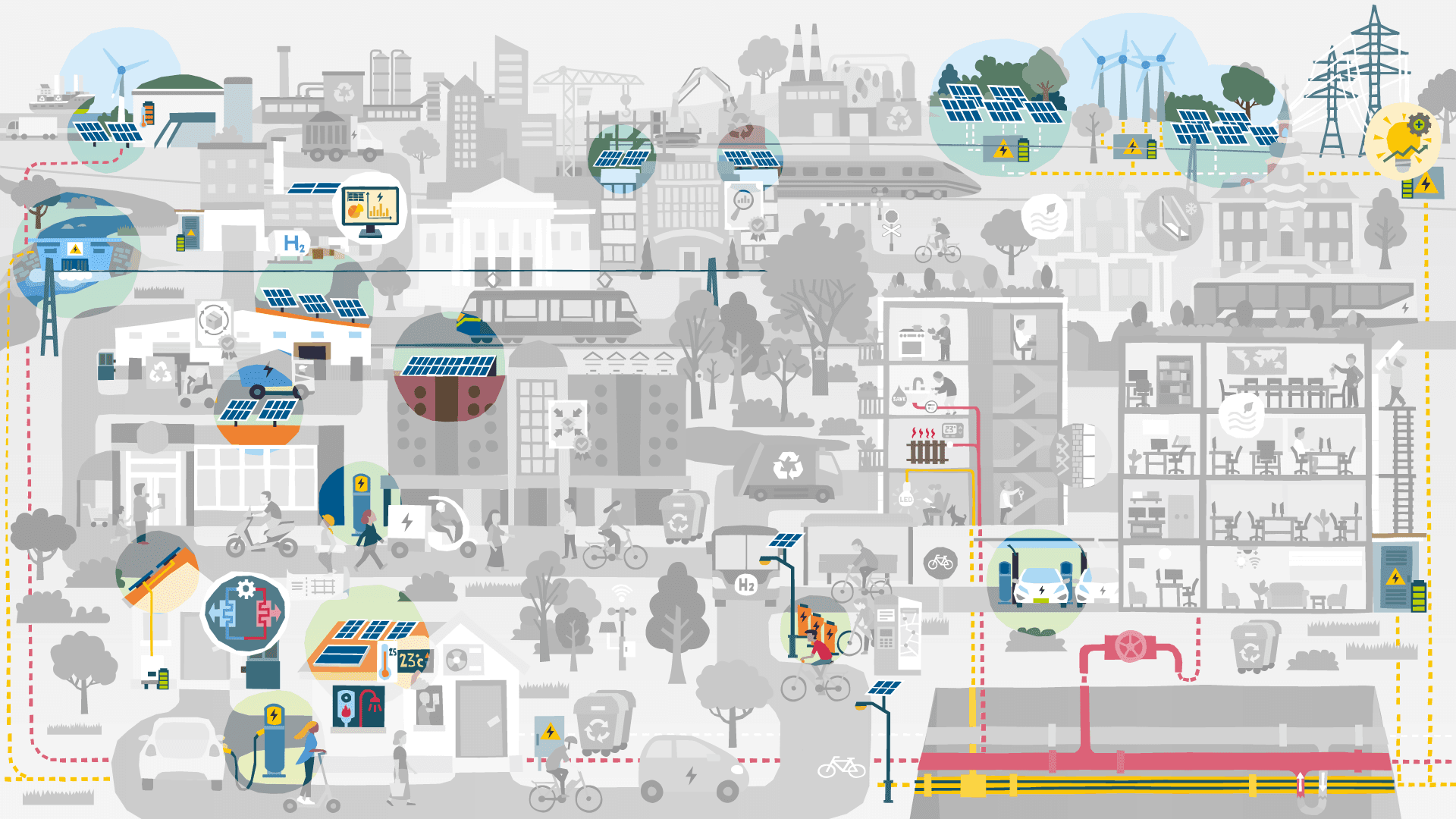
Clean, affordable and resilient energy systems are at the heart of climate-neutral cities. By transforming how energy is generated, distributed and used, cities can significantly reduce emissions while strengthening energy security, flexibility and local economic value.

Energy Systems (Stationary Energy)
Achieving climate neutrality requires a transformation of urban energy systems. Cities can accelerate emissions reductions by increasing renewable energy generation, electrifying heating and cooling, recovering waste heat, and improving system flexibility. Solutions such as district heating and cooling, smart grids, energy storage, local renewable energy and energy communities help integrate clean energy, balance supply and demand, and support the decarbonisation of buildings, transport and industry. By combining technical innovation with long-term planning and stakeholder collaboration, cities can build more resilient, efficient and affordable energy systems that support the transition to climate neutrality.
Reading Resources
Good delivery with drones
Explores drone-based delivery systems for sustainable urban logistics, including operational models, regulatory considerations, and emission-reduction potential.
Intelligent transport systems infrastructre
Describes Intelligent Transport Systems (ITS) infrastructure using ICT, AI, and IoT to improve traffic management, safety, and energy efficiency.
Scenario-based analysis (Mobility and energy - one model)
Explains scenario-based modelling tools for evaluating mobility and energy interventions through integrated simulations of environmental and spatial impacts.
City Dashboards
Explains city dashboards as digital tools for monitoring urban indicators such as emissions, traffic, and air quality to support data-driven decision-making.
Low-emission Zones
Explains Low-Emission Zones (LEZs) as regulatory tools to limit high-emission vehicles, improving air quality and supporting phased urban decarbonisation strategies.
Energy Efficiency in European Historic Urban Districts - a practical guide
This publication presents a practical guide on improving energy efficiency in European historic urban districts, developed through the EFFESUS project, which combines technical innovations, decision-support tools, and case studies to balance heritage preservation with sustainable retrofitting.
Renewable Energy for Non-renewable Historic Cities
This presentation highlights the challenges and opportunities of integrating renewable energy and energy efficiency measures into historic cities, emphasizing the need for heritage-sensitive solutions in culturally significant urban areas.
From 3G to 5G District Heating and Cooling networks (energy generation to substations)
-
Pioneering District Heating Solutions in Lund
-
Beautiful, Sustainable and Together in District heating networks
-
Positive Energy Buildings (PEBs)
Positive Energy Buildings are highly efficient buildings that generate more renewable energy than they consume, ensuring net-positive energy balance and high user comfort.
Near Zero/ Positive Energy Districts (PEDs)
Positive Energy Districts are energy-efficient neighbourhoods that generate more renewable energy than they consume, enabling net-zero emissions and integrated local energy systems.
Latent thermal energy storage (PCM)
Latent thermal energy storage uses phase change materials to store and release heat efficiently, helping balance energy demand and improve building performance.
Integrated Renovation Methodology – Guided Roadmap
A concise, reader-friendly guide translating the full Integrated Renovation Methodology into an accessible, step-by-step roadmap.
Concept: Smart Grid
Smart grid is the concept that describes the evolution of power systems to integrate and utilise techniques to adjust the flow of power to optimise the match between electricity supply and demand. The term 'smart grids' is used to define the integration of new technologies and methods, often data-driven, in existing power system infrastructure.
Concept: Eco-districts / Green neighbourhoods
As it happens with some other subsets of sustainability term or its application (i.e.: climate-neutral city, smart-sustainable city), there is not unique and clear definition for the eco-district term. Generalist definitions describe an eco-district as an urban development aiming to deploy the objectives of sustainable development, focusing on integrating environmental, social and economic goals.
EnergyNet and the Future of Local Energy Systems A Viable Cities Outlook on a New Energy Society
EnergyNet is an outlook that explores how cities can build a new, local-first energy system by integrating renewable generation, storage, flexibility and digital coordination into one coherent framework. It is useful for cities and stakeholders because it shows how this approach can make energy cleaner, more resilient and more affordable—while enabling just, community‑centred climate‑neutral transitions.
Low-GWP heat pumps
Heat Pumps (HP) are conversion devices able to transfer heat from a lower temperature heat source into a higher temperature heat sink. There are several types of HP (electricity compression heat pumps, gas driven HP, heat driven HP, etc.), the most common and efficient the electrical ones. When electricity comes from renewables, it can be considered green. Due to its versatility and high energy efficiency, the development of HP technology will be crucial in this transition toward electrification and decarbonisation of cities.
Heat pumps have traditionally used refrigerants with high global warming potential (GWP), being potentially releasers of greenhouse gases to the atmosphere (through leakages). The use of low-impact refrigerants is a need already covered by regulations, and expected to increase in the future. In fact, F-Gas regulation [2] imposes a series of restrictions on the use of refrigerants until 2030, phasing out some higher GWP refrigerants soon, which paves the way for the use of natural refrigerants (e.g. CO2, propane, and ammonia).
Heat pumps have characteristics that make them very interesting for using it in many applications, such as near-zero energy buildings (NEZB), district heating and cooling networks (distributed in every building or central heat pumps), positive energy districts, energy communities, and by combination with other sources (geothermal, solar, etc). NZEB is designed to have a very low energy demand, which is largely covered by energy from renewable sources, including the self-production of renewable energy. In this context and considering residential energy consumption, the HP is imposed as a technology for the future.
New developments of HPs are being raised for decarbonisation of industries, electrification of district heating and cooling networks, utilization of waste heat (to upgrade it and inject it in networks) and for utilizing both sinks (condenser and evaporator) at the same time (using dual source heat exchanger, see example below).
RenoBooster, triggering a building renovation wave in Vienna - Covenant of Mayors Europe
RenoBooster is an EU Horizon 2020 funded project developed in Vienna that aims to increase the number of green renovations of private housing, thereby contributing to decarbonisation in the city. Vienna supports citizens and private companies through the creation of a renovation hub that provides guidance throughout the refurbishment process and creates links between supply and demand.
Envelope thermal capacity
Enhancing the thermal performance of building envelopes by improving the thermal properties of construction systems is possible by acting upon not just the insulation level, but also the thermal inertia through proper selection of the construction materials [1–3]. The building structure itself constitutes a source of thermal energy storage and plays a key role in buffering heat and in reducing indoor temperature swings [4]. Literature claims that it is impossible to design energy-efficient buildings using only a U-value-based approach (that is, only with insulation) and that the role of thermal inertia, i.e., the positive effect of thermal capacity, appears to be relevant in particular for moderate climates [5,6].
Historical buildings using stone masonry or rammed earth are characterized by high thermal inertia [7–10]. Studies based on dynamic simulations and on-site monitoring proved that massive envelopes are able to ensure a considerable reduction of indoor thermal discomfort, especially during summer in cooling dominated climates [7]. The use of alveolar bricks or hollow bricks also increases the thermal inertia of buildings compared to tradition brick construction [11,12].
Effect of the addition of thermal inertia (i.e., addition of PCM) in the building envelope [4]
Modern architecture has moved to more innovative constructions systems using stone masonry or rammed earth. Today, stone is used by many designers to build single layer, multiple layers, composite load-bearing masonry walls, and self-supporting masonry envelopes [7]. Rammed earth construction is also moving towards multi-layers walls (i.e., including insulation) [13] and considers embodied energy and the use of sustainable materials (i.e., by-products) [14].
Another addition to modern architectural practices sensitive to the role of thermal inertia is the incorporation of phase change materials (PCM) in walls [4]. When PCM is added to the building envelope, the envelope itself becomes a source of thermal energy storage (TES) and it plays a key role in buffering heat and in mitigating the dynamicity of outdoor thermal oscillations, while displacing the heat penetration in time so that the heat reaches the indoors when it is most needed (peak load reduction and offset). Therefore, the building wall/structure acts as a heat sink during warm/hot periods (and a heat source during cool/cold periods).
Finally, another material largely studied for its thermal capacity in building envelopes is concrete. Today, studies involve increasing the circularity of concrete by developing new formulations (i.e., geopolymers) [15,16] or adding by-products (i.e., fly ash, steel slag) [17,18] or involve increasing its thermal capacity/inertia by adding PCMs in the concrete formulation [19,20].
MATURITY:
This technology is mostly very mature. As seen in the description, stone masonry and rammed earth are construction technologies available in traditional vernacular architecture. In developed countries, this construction materials/systems were substituted by other technologies (i.e., bricks, concrete), but today they are becoming interesting again due to their advantages in terms of climate change mitigation and due to the need of refurbishing the building stock.
On the other hand, the technology using PCM is not as mature, although these materials can be commercially found.
Finally, geopolymers are still in the development stage.
Urban-scale environmental decision support system (DSS) based on EPC (Energy Performance Certificate) databases
There is a noticeable potential to process Energy Performance Certificate (EPCs) to evaluate the environmental performance of the building sector at the city scale. Such assessment requires an open-access database and a standard level of EPC information reported by cities. Although a review on the availability of EPC databases revealed that several European cities currently report EPC databases, only a few have already provided a public open-access database (see external links section for further information).
Given the possibility of providing open access EPC databases as a tangible solution, the use of open data from the EPCs can lead to develop an Environmental Decision Support System (EDSS) tool, which helps in the measurement of potential environmental impacts of the buildings during different phases (e.g. operational phase), or the assessment of several environmental impact categories in compliance with the Life Cycle Assessment standards.
Deep energy renovation
Buildings represent the largest energy consumer in Europe. Deep energy renovation of the existing stock to reduce its energy consumption seems to be the most appropriate measure and a key policy to achieve emissions reduction targets. The largest part of the European building stock was built way before strict energy requirements were set and, given the long life span of buildings, it is expected that between 85 -95 % of the existing stock will be still under use by 2050 [1]. Given the importance of the global climate change and the commitments under the Paris agreement, the European Union, (EU), has proposed in the Climate Target Plan 2030 to reduce the greenhouse gas emissions by at least 55% by 2030 compared to 1990 (2).
However, according to a recent study performed on behalf of the European Commission (3), ‘the average total annual energy renovation rate of residential buildings, namely the sum of all different levels of energy renovation depths from “below threshold” to “deep renovations”, for the period 2012-2016 based on floor area is estimated to be at around 12% for EU28 as a whole. For residential buildings, the annual weighted energy renovation rate was estimated close to 1% within the European Union. This is in line with other estimations of the European Commission (0.4-1.2% depending on the Member State) and highlights the insufficient progress in the building sector in terms of moving towards decarbonisation of the building stock’. Therefore, the weighted annual energy renovation rate in the EU is as low as 1% while the annual rate of deep renovation is only 0.2% and 0.3% in residential and non-residential buildings, respectively (3). To break down the energy renovation barriers, the Commission introduced the Renovation Wave strategy (2), which aims to at least double the annual energy renovation rate by 2030 and to foster deep renovation.
The Energy Performance of Buildings Directive (EPBD, 2010/31/EU) is the main legal tool to enhance the energy efficiency in buildings across the EU (4). To support the implementation of the Renovation Wave strategy, the Directive was revised in 2021. The proposal defines deep renovation as a renovation that transforms buildings into Nearly-Zero Energy Buildings (NZEBs) in a first step. As of 2030, deep renovation will transform existing buildings into Zero-Emission Buildings (ZEBs) (5).
The building comprises a single volume with four rectangular courtyards and a publicly accessible ground floor that provides a new pedestrian connection between downtown Munich and the museum district. Floor-to-ceiling windows and a smart spatial organization allow employees to have visual connection to their colleagues throughout the building, while various open areas act as meeting spaces where people can collaborate across departments. Thanks to a holistic approach to sustainable design, the new building consumes 90% less electricity and uses 75% less water than its predecessor. Heating, ventilation, and air conditioning systems can be adjusted by employees, and thanks to the company’s smart building technology, data from 30,000 points allow for a comprehensive insight into the daily energy performance of the building.
The deep or NZEB renovation level vary across the Member States. Common measures identified in deep renovation include thermal insulation to achieve U-values of 0.10 – 0.20 W/(m²K) for walls and 0.10 – 0.20 W/(m²K) for roofs, passive technologies (shading devices, natural ventilation, night cooling, thermal mass), active technologies (mechanical ventilation with heat recovery, condensing boilers, district heating) and renewable energy from photovoltaics (PVs) and solar thermal (6).
The main purpose of this document is to provide knowledge, information and a reference for the city decision makers, building professionals and building stakeholders to implement appropriate energy renovation measures across the EU Member Countries.
Energy management techniques
To reach the target of climate neutrality of European cities by 2030, it is very important to introduce renewable energy systems into the global energy system. To manage the fluctuating power generation of renewable energy systems, it is very important to use energy management techniques.
Microgrids
Microgrid is usually understood as sub-area of an electricity distribution network that is organized and operated independently but is connected to the public electricity grid. Several energy producers and consumers are connected to the microgrid, whereby its expansion is usually limited to campus, several buildings, or a neighborhood due to the limitations of the regulatory framework. The microgrid has an intelligent control system and optimizes operation in such a way that the highest possible proportion of self-sufficiency is achieved with local renewable energies and the purchase and feed-in of electricity is designed to be as system-serving as possible for the public grid.
Renovation of DH&CN (1G and 2G)
District heating and cooling systems consist of heating and/or cooling production facilities and distribution grids similar to electricity systems. They essentially produce heating and cooling energy remotely and transport it to the consumers.
From 3G to 5G District Heating and Cooling networks (generation to substations)
The new generation of district heating and cooling networks are based on low and/or ultra-low temperature sources of renewable energy and waste heat for heating as well as high-temperature cooling. Such networks provide key options for decarbonizing the thermal energy needs of the building sector and allow supporting strategies for climate neutrality in the urban context for reaching net-zero greenhouse gas emissions while increasing energy security.
Seasonal storage (pits, dwells, etc.)
Thermal energy storage (TES) systems can stock heat or cold to be used at a later time under varying conditions such as temperature, place, time, or power. The main use of TES is to overcome the mismatch between energy generation and energy use.
Thermal Energy Storage
Thermal energy storage (TES) systems can store heat or cold to be used later, under varying conditions such as temperature, place, time, or power. The main use of TES is to overcome the mismatch between energy generation and energy use.
Electricity storage: Chemical storage
Chemical storage refers to storing electricity that can be released as required though chemical processes. Known also as batteries that can act as chemical energy storage and become future energy generation solutions more efficient and profitable. They are especially interesting for intermittent renewable sources (e.g. solar or wind energy generation) for making efficient use of the availability.
Waste heat recovery in district heating networks
District heating (DH) is an energy infrastructure that distributes centrally generated heat to the consumers (buildings). One of the main advantages of DH lies in its ability to recover and reuse heat that would otherwise be wasted by distributing it to customers provided that the temperature levels are appropriate. Waste heat recovery becomes essential in the decarbonisation path of the energy system. The main benefit consists in bringing energy efficiency at urban scale by substituting the energy delivered by individual heating system with the distribution of already available waste heat form industrial processes.
Fuel cells
Fuel Cells (FC) are electrochemical devices that transform hydrogen and oxygen to obtain water and electrical power through an oxidation chemical reaction. FC are known as gas-to-power (or hydrogen-to-power) technologies. Unlike batteries, the reactive compounds are consumed continuously and produce electricity on-site.
Sustainable biomass and biogas power
Biomass includes all land- and water-based vegetation, as well as all organic wastes. As a renewable energy source, biomass is used for facility heating, electric power generation, and combined heat and power (CHP).
Co-generation systems
Co-generation is the simultaneous production of electricity and useful heat. In a regular power plant, the heat remaining in the generation of electricity is released to the environment, mostly through cooling towers or cooling water, whereas in a cogeneration plant, the heat is recovered for use in homes, businesses, and industry.
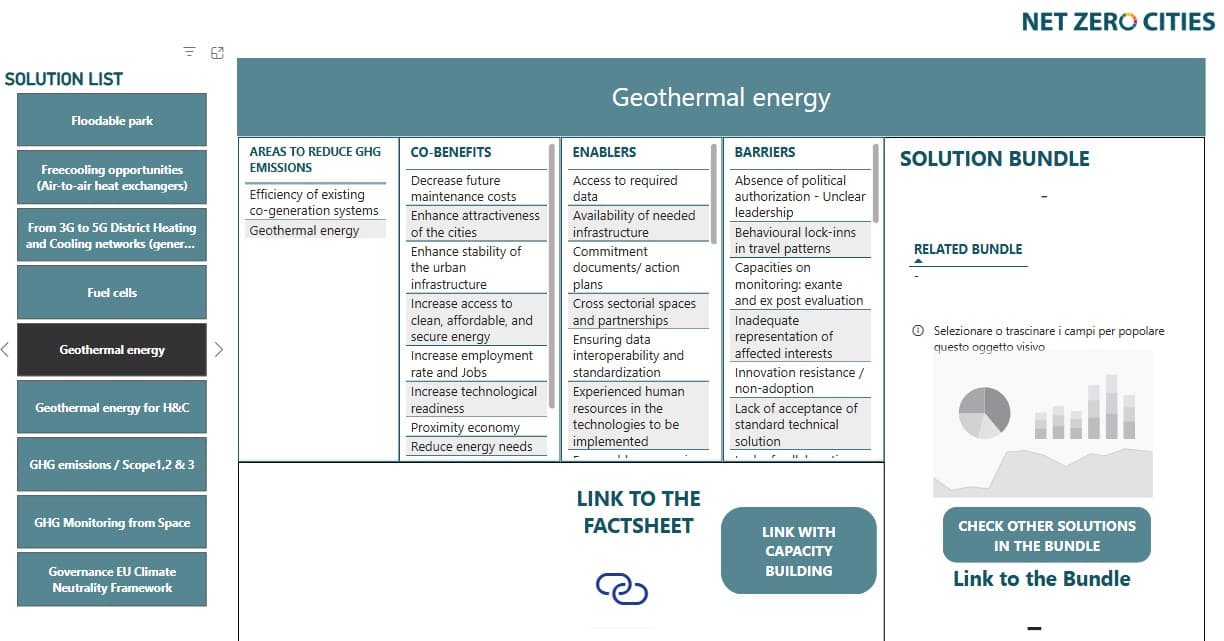
Geothermal energy
Geothermal energy has a long tradition in human history, from thermal baths to heating and power generation. It represents an important resource of renewable energy. The use of geothermal energy normally requires high temperatures to be viable. This often means deeper and more expensive drilling work. Some technologies can produce power at lower temperatures but they are more expensive and usually less efficient resulting in a higher production cost.
Micro-hydropower generation in urban water networks
Cities are a framework where the water-energy nexus is becoming critical due to demographic movements, economic growth, or the inexorable increase in the demand for both resources. Metropolises around the world are also facing global change pressures due to climate change and water scarcity, which are making it a challenge to continue to deliver core urban water services without increasing the impact on the natural environment. Urban water networks can be considered a source of renewable energy as they usually hold untapped energy deriving from abundant pressure (water head) or kinetic energy (water flow).
Distributed wind
Distributed wind consists of wind turbines connected to the distribution level of the electric grid, to serve either on-site loads or local loads in the same grid. Use cases are utility (cooperative or publicly owned), industrial, residential, institutional, governmental, commercial, or agricultural. The most common grid applications are grid-connected microgrids, isolated grids, and remote off-grid.
Passive building design strategies: building orientation, passive heating and cooling
Passive building design uses climate-responsive strategies such as orientation, massing, shading, material selection, thermal mass, insulation, layout and opening placement to maintain indoor comfort through passive heating, passive cooling and natural ventilation.
Guarantee the energy saving/production in buildings
Different service providers offer services to help customers improve their buildings energy performance. These are typically called energy service companies (ESCOs). They can help achieve energy savings by implementing energy-efficiency and renewable energy projects.
Waste to energy in buildings
Grinded Bio Waste and Blackwater (water from toilets or kitchens) generated in households can be treated in Anaerobic Membrane Bio-Reactors (AnMBR) for the recovery of treated blackwater, compost, and renewable energy. Absorption technologies can be used to ensure biogas quality.
Production of biofuel based on black liquor from the paper industry
Black Liquor is a by-product of pulp from mills that make products from trees, such as paper. It is currently used to recover cooking chemicals and produce high-pressure steam used in the pulp and paper-making process. It is composed of different ingredients from these processes such as lignin, hemicellulose, sodium hydroxide (NaOH) and sodium sulfide (Na2S).
Case Studies
Guimarães: From Cradle of a Nation to Cradle of Innovation
-
Malmö’s bold road to climate neutrality: A model for systemic change
-
Drammen’s zero-emission mosaic for 2030
-
Resilient BoTu 2028
This resource explores Resilient BoTu 2028 in Rotterdam as a community-driven approach to climate transition that uses the energy shift to strengthen social cohesion and local capacity. It highlights how Asset-Based Community Development empowers residents, builds local skills and jobs, and addresses energy poverty through integrated, neighbourhood-level action.
Natural gas-free homes: drivers and barriers for residents
This method analyses the drivers and barriers residents face in moving toward natural gas-free homes, using a customer journey approach and qualitative research. It helps cities and stakeholders better understand resident motivations, resistance, and support needs when planning inclusive home energy transition and retrofit strategies.
EmpowerMed
This case study presents EmpowerMed, a project tackling energy poverty through community empowerment and participatory approaches (Collective Advisory Assemblies). It shows how peer learning and data-driven insights can support more inclusive and just climate transition outcomes.
Järva Dialog
This case study describes the Järva Dialog in Stockholm, a large-scale participatory process involving residents in energy-efficient housing renovations through open meetings, education, and community engagement. It shows how cities can use inclusive dialogue and capacity-building to improve retrofit projects, increase acceptance, and deliver both energy efficiency and social co-benefits.
Greater Manchester - Powering a Greener Future and Building a Carbon-Neutral City
A core priority for the Greener Greater Manchester initiative is decarbonising the built environment. The PSDS, a government-funded programme, supports public institutions in transitioning from fossil fuelled to low-carbon heating systems, with £2.5 billion allocated for this purpose. Working closely with local authorities, the GMCA has implemented 807 measures across 217 sites, including air source heat pumps, solar panels, energy management systems, and insulation, in collaboration with 29 partners.
Learning from Cities
A map is loading
