NZC Systems Perspectives
image

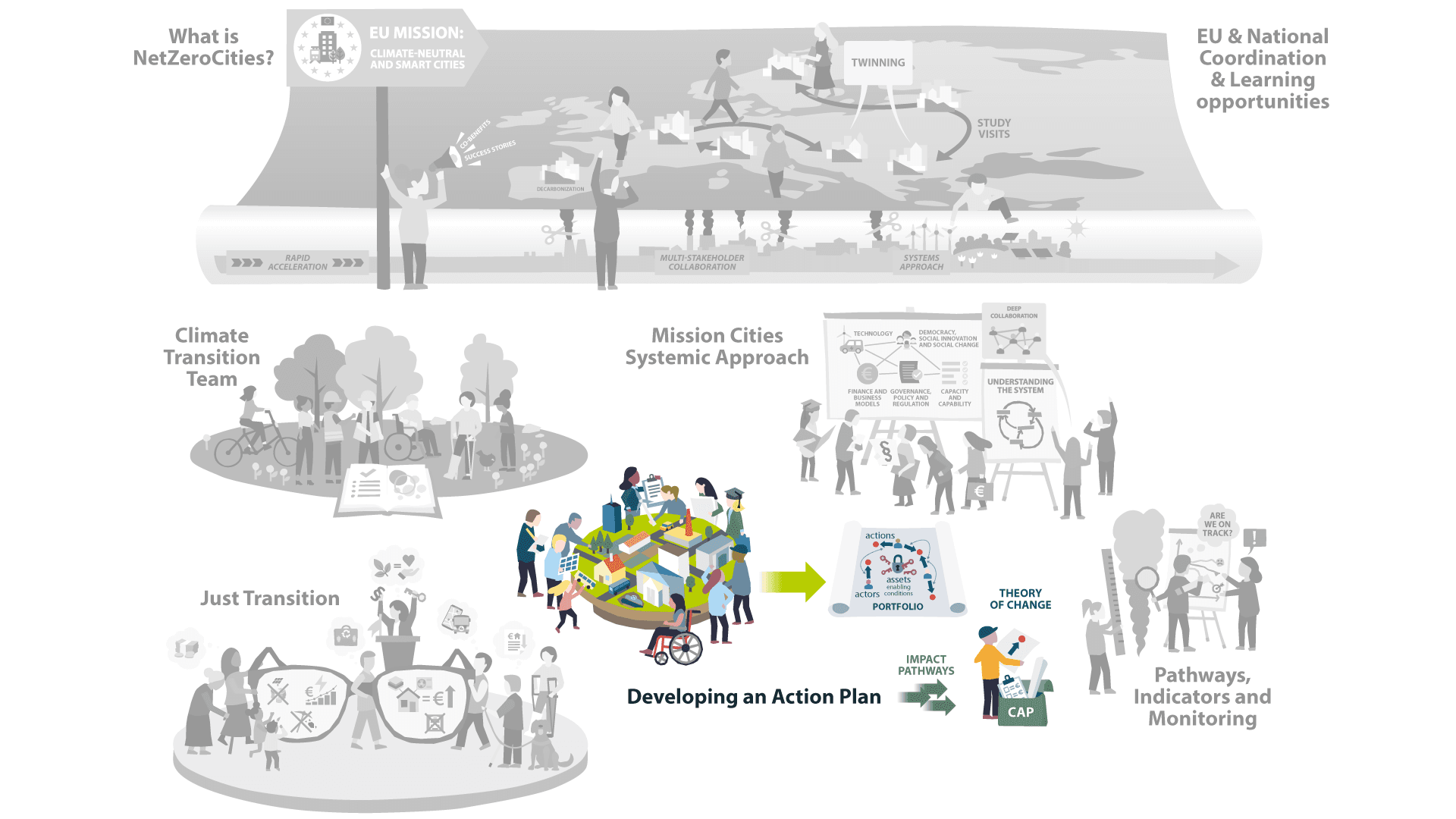
A Climate Action Plan serves as a data-driven roadmap that outlines the actions, targets and pathways necessary for cities to achieve their climate neutrality goals. It involves co-designing a portfolio to map the vital relationships between actions, actors, and resources, helping to identify gaps and coordinate efforts across city departments. The process relies on an iterative cycle of planning, monitoring, evaluation, and learning, which allows cities to track progress and adapt their implementation strategies based on real-world results.

location_pin
Developing an Action Plan

Developing a Climate Action Plan involves creating a data-driven roadmap that outlines the actions, targets, and pathways necessary to achieve climate neutrality. It requires co-designing a portfolio that maps the   interconnections between actions, actors, and resources to identify gaps and foster a shared understanding across city departments. Success is driven by an iterative cycle of planning, monitoring, and learning that allows cities to adapt their implementation strategies based on real-world evidence and progress.

An effective action plan serves as the strategic framework for a city’s transition toward net-zero, moving beyond a basic list of projects to create a coordinated portfolio of interconnected actions, actors, and enabling conditions.  Through a continuous planning process, cities can define clear targets, identify where investments can have the greatest impact, and ensure that their strategies are tailored to their specific urban context. Furthermore, integrating robust monitoring, evaluation, and learning (MEL) processes into the plan allows local teams to track greenhouse gas reductions, address implementation challenges, and continuously refine their actions to stay on track toward their climate goals.

Videos
Reading Resources
NetZeroPlanner 3.0 - What's new?

Based on feedback from cities, we are excited to announce the launch of NetZeroPlanner Version 3 which will provide substantial improvements to both the user experience and accuracy of the climate planning, monitoring / evaluation / learning, and implementation management capabilities of the system.

NetZeroPlanner Cost Assumptions Update – Summary Report

The cost assumptions within the Net Zero Planner, which is based on the primary database developed by Material Economics (ME), have been updated for all relevant sectors where applicable. Due to its broad sectoral and geographical scope, the model employs strategic approximations and simplifications to provide a high-level overview and enable cross-city comparisons. This report summarises the reasoning behind the updated values.
NetZeroPlanner Model Overview
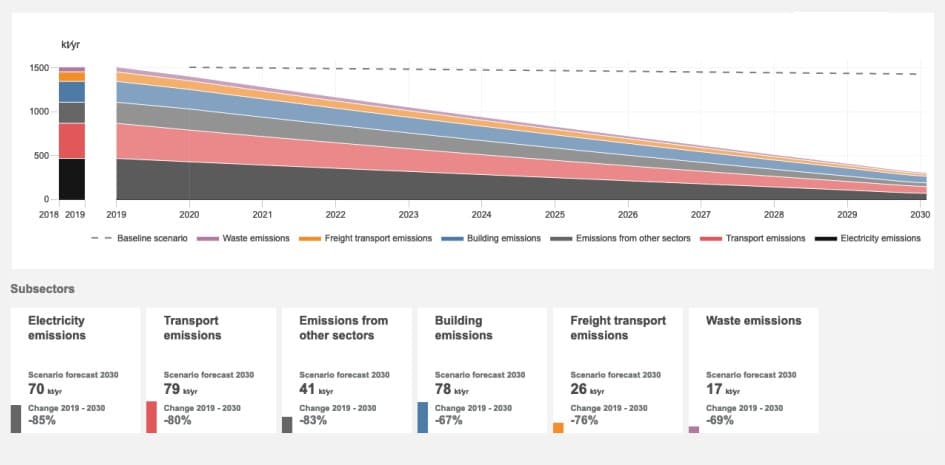
The document provides an overview of the NetZeroPlanner model, which helps cities quantify their economic case for decarbonization by analyzing emissions reductions and associated costs
Co-benefits for net-zero cities
This document explains the use of co-benefits in the NetZeroPlanner tool
Economic model methodology
This document includes a detail explanation of NZP methodology​ behind Passenger transport levers • Freight transport levers • Buildings & heating levers • Electricity levers • Waste levers
Understanding the Economic Case for Decarbonising Cities
This document includes a detailed review of the NZC Economic Model calculations and how they work to create an economic case analysis for cities.
NetZeroPlanner 2.0 - What's new?
Learn more about the upgrades and explore the new functionalities of NetZeroPlanner.
Companion guide for Civic environment mapping
This guidebook describes how the use of simple and intuitive civic environment mapping tools
Economic Model for Climate Neutrality: full collection of resources, cases and methods
Why Economic Case Analysis for City Decarbonisation is crucial
Concept: Urban green space ecology
From the land use planning perspective, urban green spaces or urban green areas are defined by Corine Land Cover classification[1] as “Areas with vegetation within or partly embraced by urban fabric.
Contracts for difference (CFD)
Contracts for Difference (CFDs) are agreements that offer cities a way to guarantee a fixed price for clean energy or services
Energy Performance Contract (EPC)
An Energy Performance Contract (EPC) is a contract where an array of services is agreed upon, and the provider of the services can guarantee that a minimum of energy savings or sustainability value will be achieved.
National payment for ecosystem service (PES) schemes
In this payment for ecosystem service (PES) modality, the scheme is implemented and coordinated at the national level.
NetZeroCities interactive map of learning resources
State-of-the art on technical solutions to achieve climate neutrality (WP10)
To effectively combat climate change and achieve climate neutrality, it's essential to define and implement the most advanced and innovative solutions.
Bridging the Energy Transition: Energy Communities and Combating Energy Poverty in European Cities
Energy communities embody collective action towards renewable energy adoption, which is integral to achieving the EU’s climate-neutrality goals.
Enabling Instruments
The problems cities face in mitigating and adapting to climate change are complex, rooted in technical, economic, financial, organisational, political, cultural, and social systems.
Term Loans
Financing new climate-friendly infrastructure: Term loans are ideal for long-term, sustainable projects such as energy renovations, green mobility, or climate adaptation measures.
Development-based land value capture (LVC)
Development-based land value capture (LVC) offers cities a powerful financing tool to unlock the increased land values generated by public investments and policy actions.
Carbon credits from carbon markets (international or regional)
Financial resources can be made available to cities for climate action by participation in international or national emissions trading schemes (ETS)
Concessional finance
A Concessional Loan is a loan that is offered on more favourable terms than a standard market loan.
Urban Typologies Factsheet - UP2030
Systematic support for scaling up climate action across NUTS-3 units in the EU
JRC Collection
The Joint Research Centre has produced a collection of documents to help cities identify how to mitigate greenhouse gas emissions.
Slides: NZC CCC Action Plan Webinar
NZC CCC Action Plan Webinar Slides
Integrated climate plans for cities (i.e. SECAPs)
Resource on how to integrate climate plans under the format of Sustainable Energy and Climate action Plans (SECAP)
Economic Case for Decarbonization Tutorial
The economic case is the foundation of a city’s decarbonization strategic plan as documented in the Climate City Contract (CCC).
NetZeroPlanner
NetZeroPlanner is a powerful data-driven decision making tool that empowers city leaders to assess the impact of their Climate Action Plan and refine their roadmaps to ensure they meet decarbonisation goals.
Charges and pricing for actions and services
Charges and pricing for public action and services refer to policy mechanisms where city authorities impose fees for the use of urban assets or services.
City climate funds
These funds allow cities to establish dedicated funds to finance climate-related projects, often leveraging private sector investment.
Energy services companies (ESCOs)
Energy service companies (ESCOs) deliver energy efficiency projects that are financed based on energy savings
Climate bond
Climate bonds can mobilize resources from domestic and international capital markets for climate change adaptation, renewables and other environment-friendly projects
Urban Climate Transition Visualised (Graphics Accompanying NZC Online Planning Lab for Mission-minded cities)
This collection of systemic visualisations has been developed as a part of the NetZeroCities Design Your City’s Net Zero Strategy Online Planning Lab for Mission-minded cities to support municipal learners in understanding different areas of urban climate transition (e.g. governance and policy, action planning and MEL, technical solutions, financing, engagement, communication, and justice).
San Benedetto del Tronto case studies - Intelligent Cities Challenge
The Intelligent Cities Challenge (ICC) is a European Commission initiative bringing together 136 cities to achieve intelligent, socially responsible and sustainable growth through advanced technologies. This resources includes case studies from the city of San Benedetto del Tronto, italy related to:
Boost Your Climate Action Planning with NetZeroPlanner
Two practical resources now available to help municipal teams plan smarter, invest better, and accelerate climate action:
Introductory Summary on Creating, implementing, and iterating your Climate Action Plan
Tools for climate action planning
In this page, you can find an overview of tools that cities can utilise for creating their action plan: NetZeroPlanner, Climateview, SuperUrbanity, Kausal and others
Showcase
showcase imageOpen tool
Learning from Cities

A map is loading