


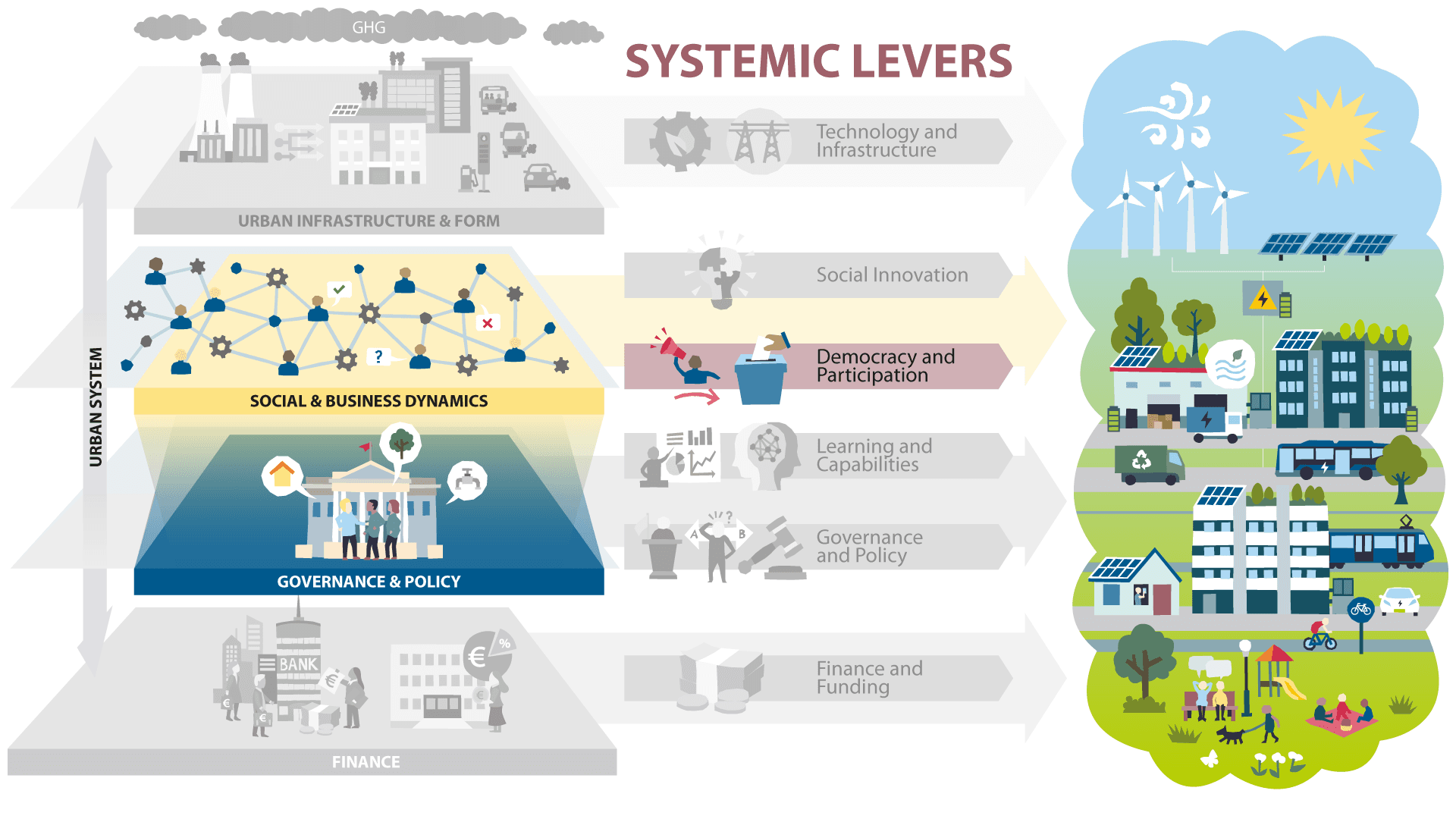
Partnerships and Policies are essential for a systemic climate transition, requiring the alignment of local, national, and European strategies alongside robust collaboration between cities and their stakeholders. This page offers a comprehensive overview of resources—including policy briefs, case studies, networks and partner projects and initiatives—designed to help cities navigate complex regulatory landscapes and leverage collective action to achieve climate neutrality. Lessons learned and solutions from partner projects within the Cities Mission framework are especially relevant and can be easily accessed through City Support and the Community of Practice.

Achieving climate neutrality by 2030 requires moving beyond traditional, siloed approaches through Mission-Driven Policy Innovation (MDPI), which applies a systemic perspective to reveal synergies that are often lost in conventional policymaking and ways of working. Cities should incorporate the private sector, industry, the financial sector, and the social sector into their plans in order to advance processes in which all of them are involved. Work on public procurement, co-created projects with citizens, and the engagement and implementation of emission reduction plans by companies and industry can be found among the materials. In addition, cities can use dedicated spaces such as Policy Labs, Regulatory Sandboxes, and Policy Studios to collectively identify barriers in priorities shared by several cities, work on existing policies, and recommend the necessary changes; in some cases, they can even test experimental frameworks and policy mixes under real conditions. Furthermore, integrating Climate Action Plans (CAPs) into mandatory urban planning systems is vital to ensure their legal enforceability and to safeguard their long-term implementation against changes in political cycles.
Success also depends on Multi-Level Governance (MLG), which coordinates decision-making across all levels of government to ensure strategic alignment and the effective allocation of resources. National Mission Ecosystems and dedicated platforms serve as a “shared software” for collective action, providing spaces for trust-building and the co-creation of scalable solutions. By actively participating in European city networks, municipalities amplify their collective voice in international climate governance and can jointly seek the financial and technical support needed to test and scale transformative urban innovations.
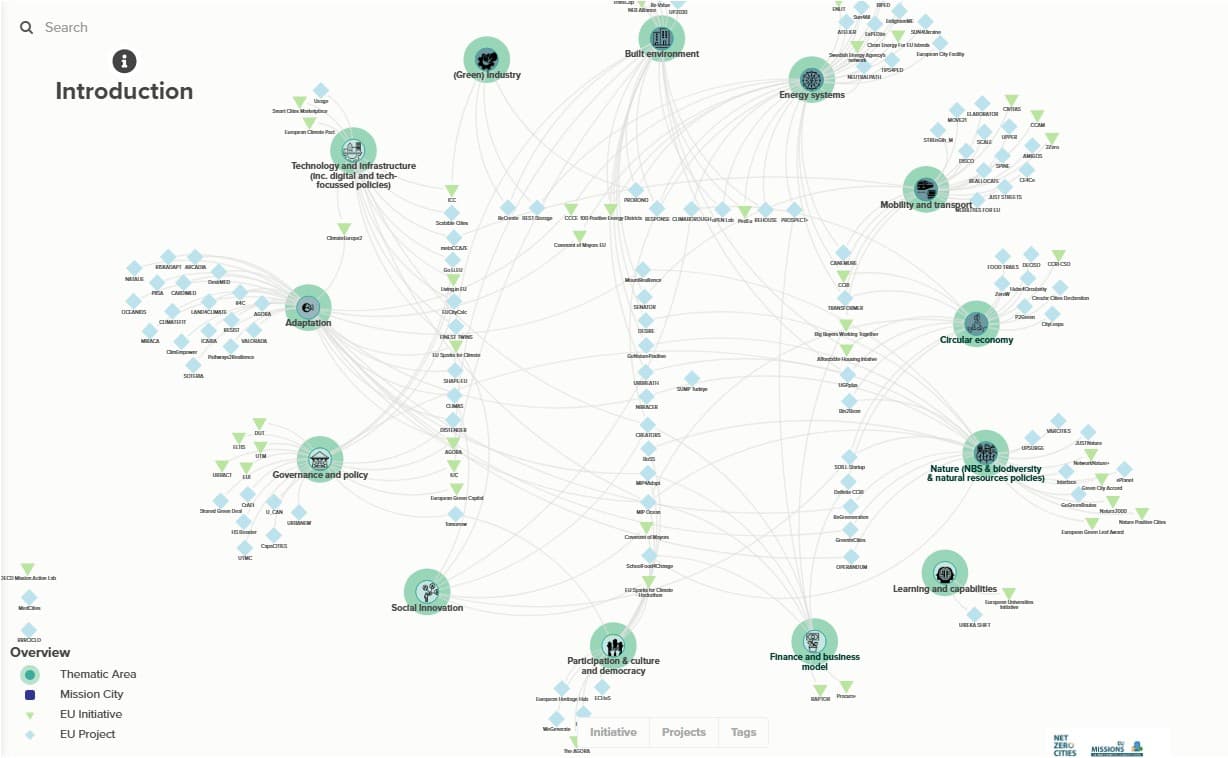
A map is loading
